Foundational Stage — Nursery to Class II
Joyful, activity-based learning through play, storytelling, music, movement, and hands-on experiences, with progress recorded through observation and child portfolios in a stress-free environment.

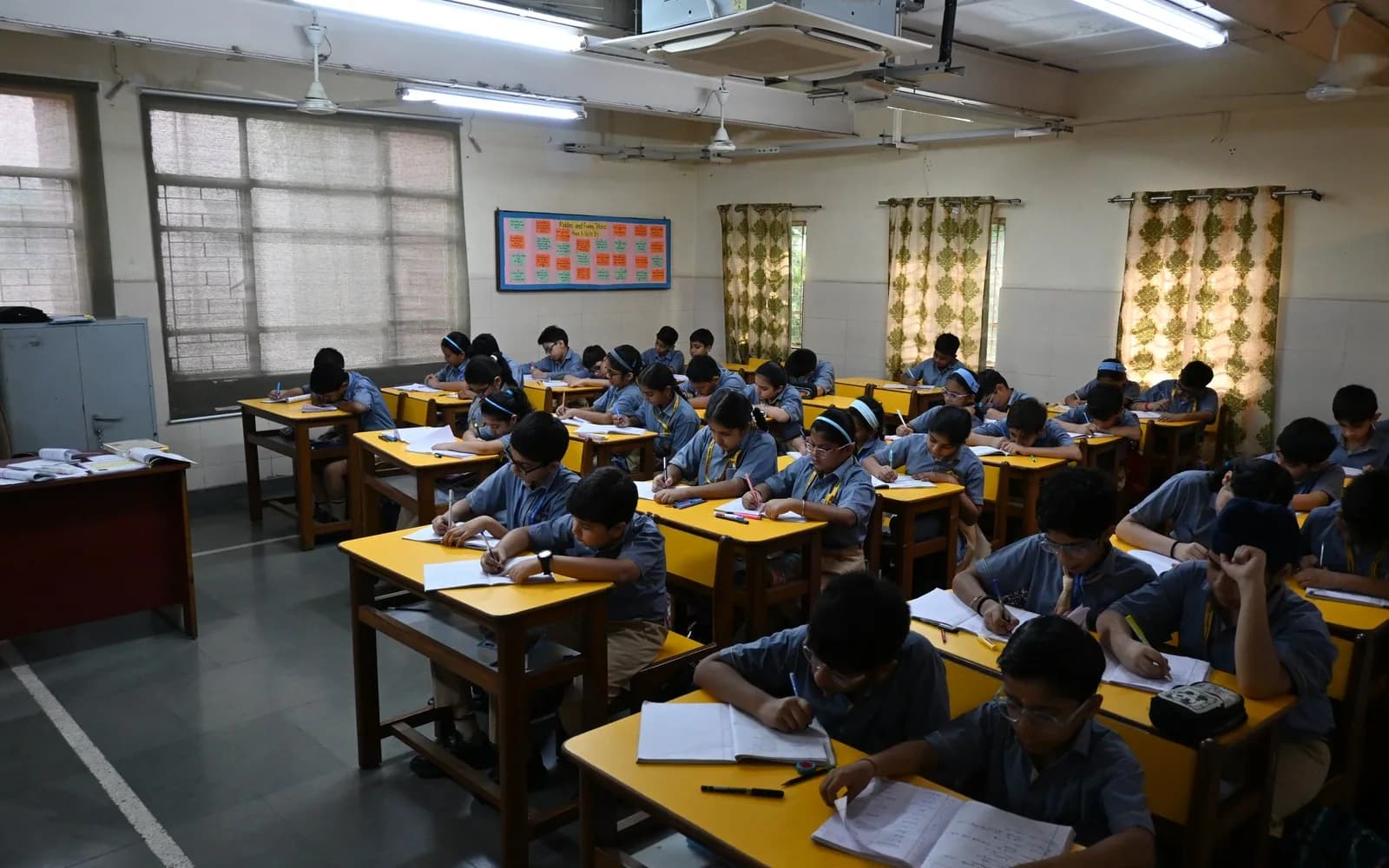
At Salwan Junior School, learning in the primary years is joyful, hands-on, and learner-centred. Our integrated curriculum — from Nursery through Class V — grows divergent thinkers through play, inquiry, and real-world experience.
Apply for Admission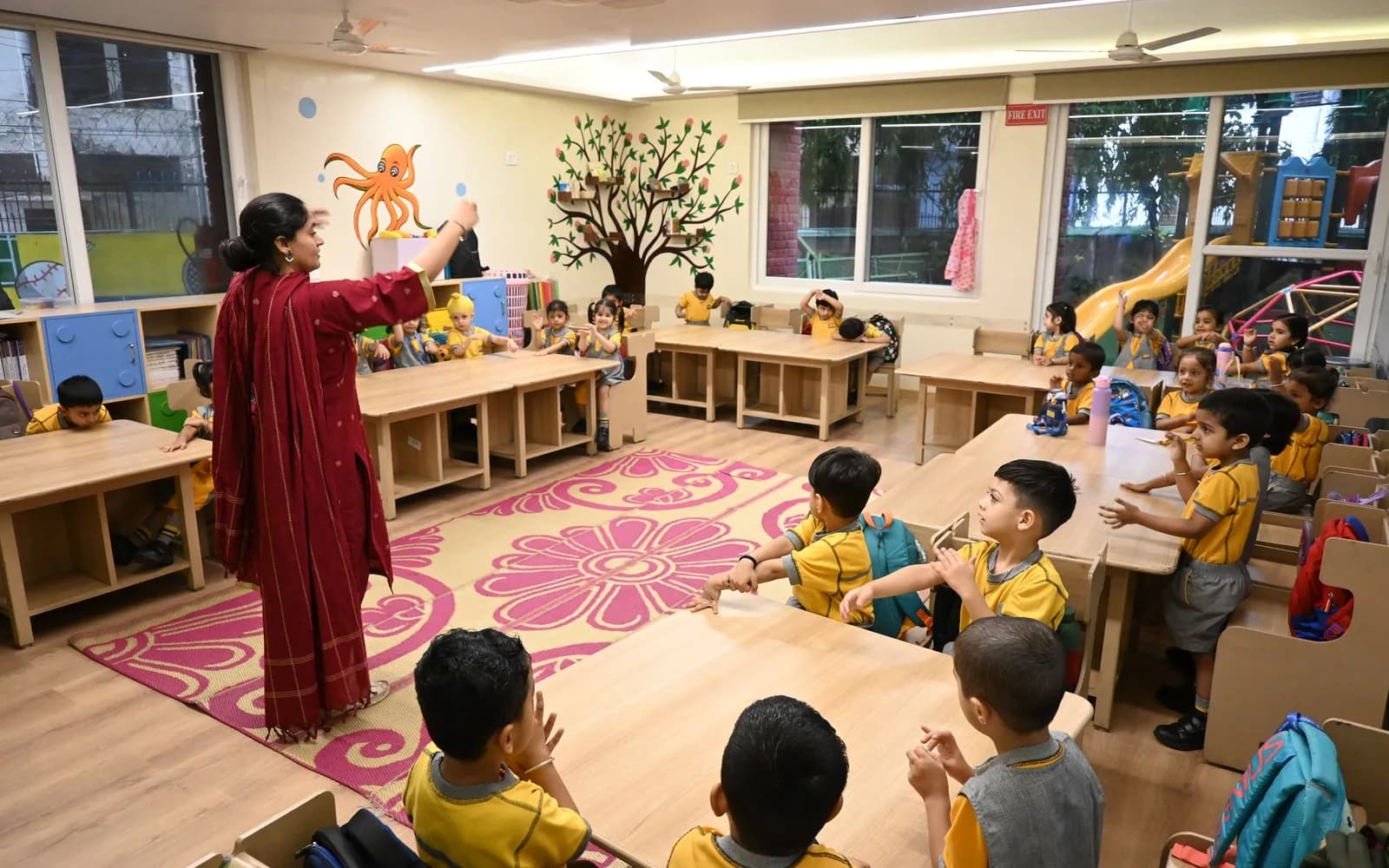
Designed as per the National Curriculum Framework, our curriculum spans the Foundational Stage (Nursery–Class II) and the Preparatory Stage (Classes III–V). Role play, field trips, project work, and group activities are woven throughout, so concepts stay etched in a child’s mind long after the lesson ends.
In the Preparatory Stage, learning is organised into core subjects and co-scholastic areas — building strong fundamentals alongside all-round personality development.
Our classrooms are active spaces built for hands-on, interdisciplinary learning. Teaching methodologies focus on capacity-building and skill development, nurturing critical and creative thinking, an inquiry-based questioning culture, and real-world problem-solving.
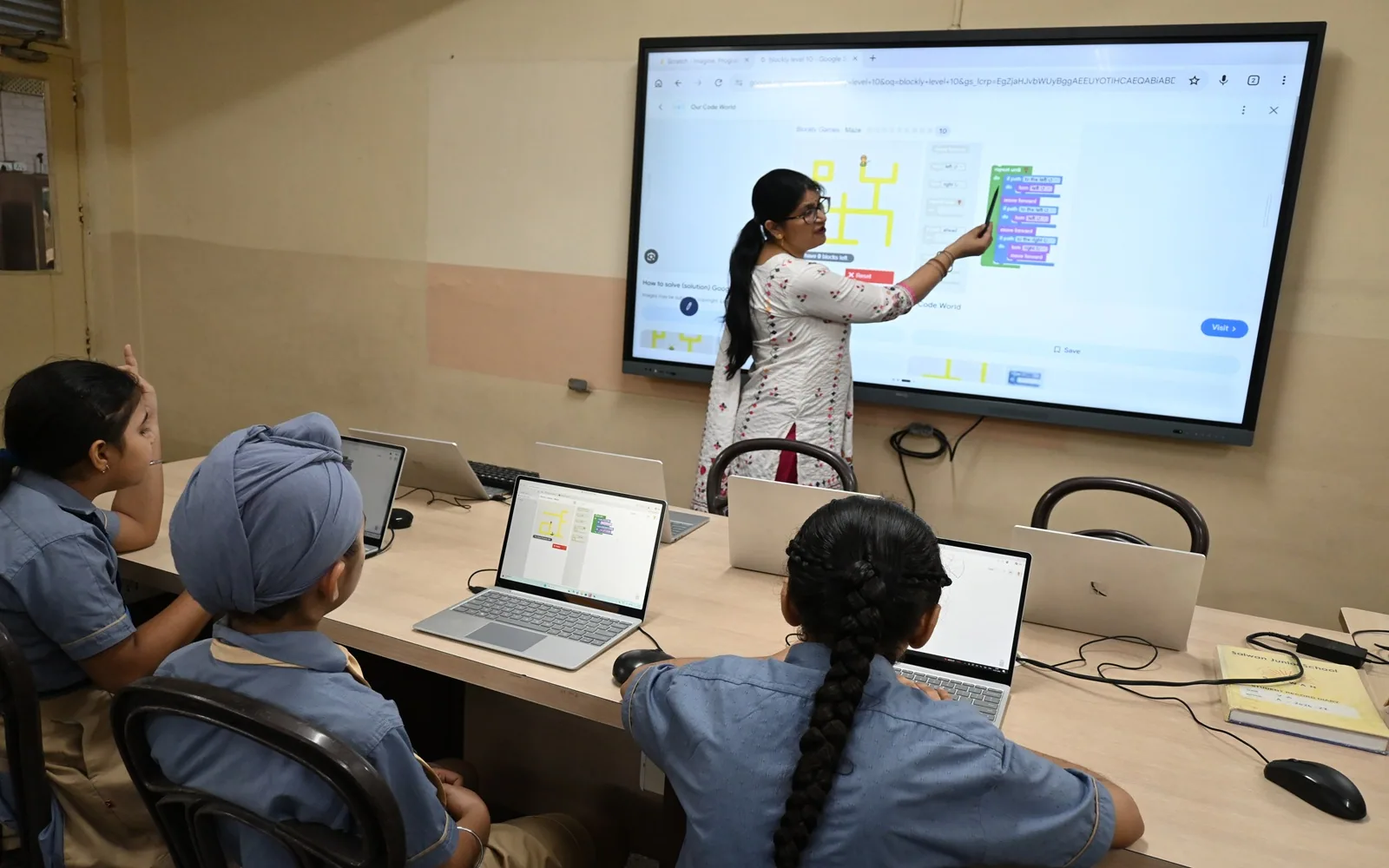
As a Microsoft Showcase School, we weave technology in meaningfully — coding with Scratch, physical computing with Micro:bit, AI literacy, and digital creation with Adobe Express. Twenty of our teachers are Microsoft Innovative Educator Experts, bringing cutting-edge practice into daily classroom life.
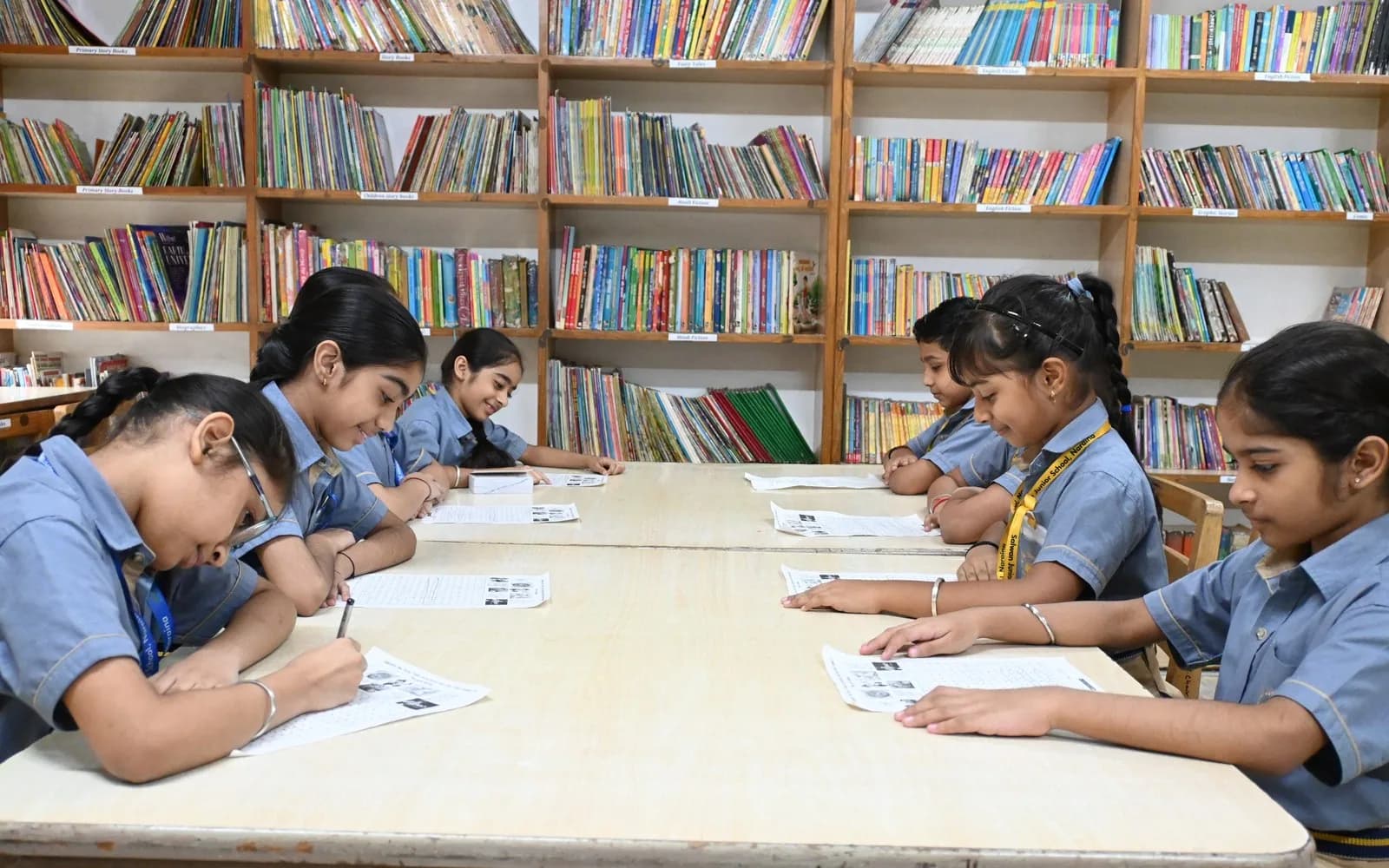
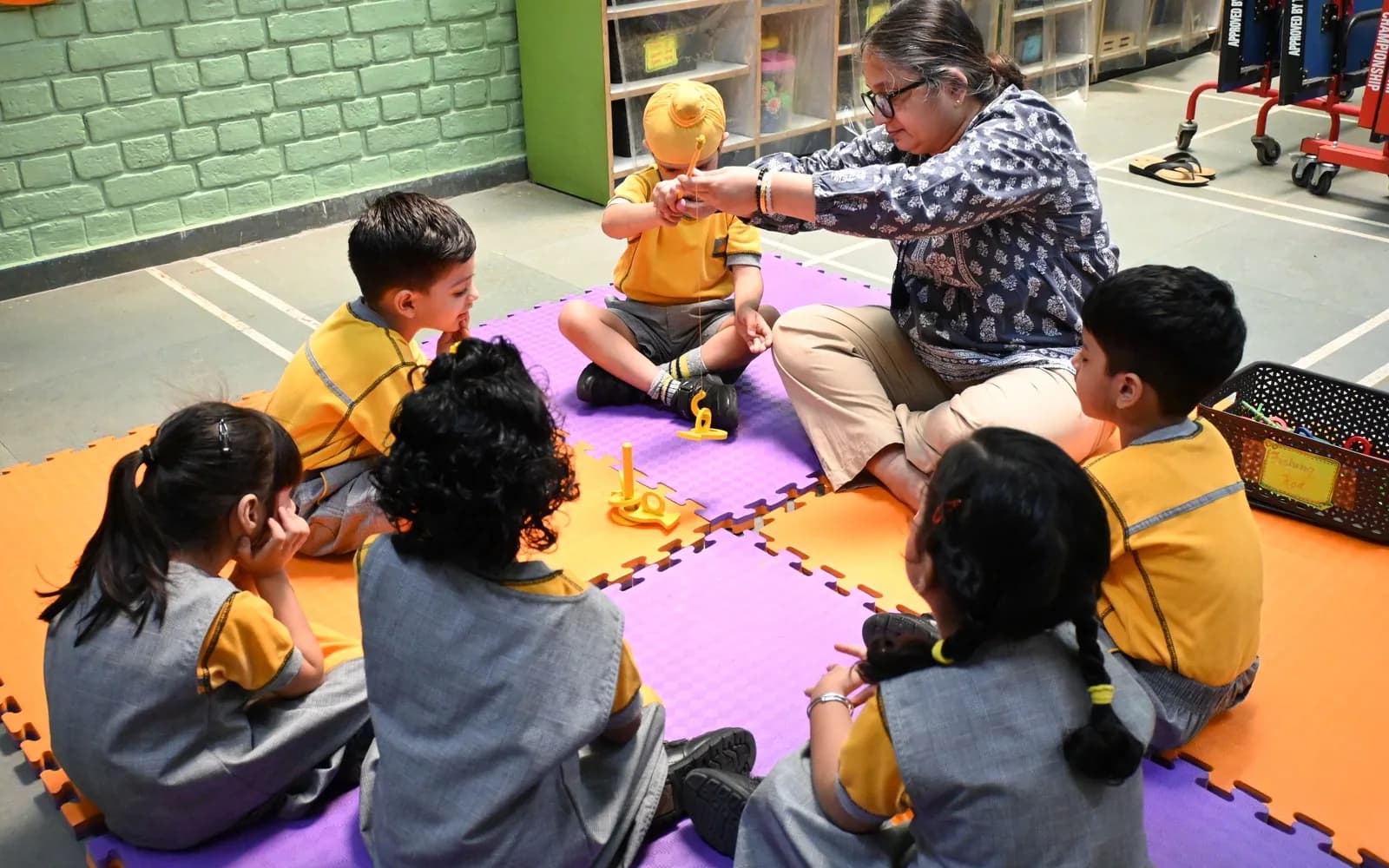
Alongside academics, we prioritise life skills and well-being — happiness, strength, resolution, emotional, interaction, relationship, self-management, and empathy skills — to support each child’s mental well-being, now and into the future.
Teachers strengthen communication skills and ignite each child’s natural curiosity, helping every learner develop originality, creativity, and independence of thought alongside fundamental skill mastery.
Assessment here is not about ranking a child — it is a pathway to discovering strengths, building confidence, and supporting holistic development.
Assessment is an ongoing, collaborative process rather than a one-time event, drawing teachers, parents, peers, and children into the cycle through observation, portfolios, and reflection.
A holistic, NEP-aligned approach tracks cognitive skills, socio-emotional growth, physical well-being, and creativity. Progress is captured through observations, project work, storytelling, role-play, and teacher–child interactions, with minimal summative testing.
Holistic report cards use qualitative descriptors — strengths, milestones reached, and next steps — rather than grades or marks.
Assessment follows the Promotion Policy and Examination & Assessment Guidelines of the Directorate of Education, ensuring transparent and inclusive evaluation aligned with holistic development.
Written work, projects, practicals, and continuous observation together build a complete picture of each child’s progress.
Joyful, activity-based learning through play, storytelling, music, movement, and hands-on experiences, with progress recorded through observation and child portfolios in a stress-free environment.
Core subjects and co-scholastic areas taught through experiential, project-based strategies that build a strong foundation for all-round development and maximise learning outcomes.
Themes, activities, and enrichment for each month are shared through the school’s Monthly Planner, enabling families to stay connected with their child’s learning journey. The latest Monthly Planner is available in the Resources section.
Our curriculum has been redesigned by school faculty aligned with NEP 2020, bringing a paradigm shift to teaching and learning at the pre-primary and primary levels — through an innovative, learner-centred approach that enhances each child’s creative and cognitive skills.
NEP 2020 replaces the 10+2 Structure with a 5+3+3+4 design spanning ages 3–18. Our Foundational Stage (Nursery–Class II) and Preparatory Stage (Classes III–V) map directly onto its first years, anchoring the child’s earliest school experience.
Ensuring every child achieves basic reading, writing, and numeracy by Class II is a national priority — and ours. Play, storytelling, music, and hands-on work build these skills joyfully in the early years.
The policy encourages learning in the child’s mother tongue or regional language up to Class V, alongside the three-language formula. English and Hindi both hold a firm place in our primary curriculum.
NEP 2020 introduces coding, AI literacy, and digital tools into the classroom. As a Microsoft Showcase School, we bring these in early and meaningfully, redesigning our pedagogy to enhance every child’s creative and cognitive skills.
Admissions for the coming session are open. Discover how a Salwan Junior School education gives young children a joyful, confident start.